📑 Table of Contents
We're at an inflection point in marketing history. The last three years have seen more change in marketing technology than the previous three decades combined. But the transformation we've witnessed so far is just the beginning. The AI capabilities being developed in research labs today will reshape marketing in ways most professionals haven't even imagined. This article presents our 15 most confident predictions for the future of AI in marketing, based on current technology trajectories, industry analysis, and our frontline experience at Brainvare.
These aren't wishful thinking or hype. They're grounded in observable trends, emerging technologies, and the real-world applications we're already building for our clients.
Autonomous Marketing AI Agents (Predictions 1-4)
1. AI Marketing Agents Will Manage Entire Campaigns
By 2027, AI agents will autonomously manage complete marketing campaigns — from strategy and creative generation to budget allocation, optimization, and reporting. These agents won't just execute tasks; they'll make strategic decisions based on real-time data, adjusting targeting, messaging, and spend allocation without human intervention. The role of human marketers will shift from campaign managers to campaign strategists and AI supervisors.
2. Multi-Agent AI Systems Will Collaborate
Specialized AI agents will work together as coordinated teams. A content agent, SEO agent, social media agent, email agent, and analytics agent will collaborate — sharing data, coordinating timing, and optimizing cross-channel campaigns automatically. Companies like Google, Meta, and Salesforce are already building these multi-agent systems. The first commercially available versions will appear by late 2027.
3. AI Will Handle 80% of Routine Marketing Decisions
The vast majority of day-to-day marketing decisions — what to post, when to send, how much to bid, which creative to show — will be made by AI. Humans will focus on the 20% of decisions that require strategic judgment, creative vision, and ethical consideration. This isn't a prediction; it's already happening at AI-forward agencies. The shift will become universal by 2027.
4. AI Will Generate and Test Marketing Strategies
AI won't just execute strategies — it will propose them. By analyzing market conditions, competitive landscape, customer behavior, and historical performance data, AI will generate complete marketing strategy proposals with predicted outcomes. Marketers will evaluate and refine AI-proposed strategies rather than starting from scratch.
The Synthetic Media Revolution (Predictions 5-7)
5. Every Ad Will Be Dynamically Generated
Static ads will become obsolete. AI will dynamically generate ad creative — images, video, copy, and audio — in real-time for each individual viewer. Instead of creating 10 ad variations and testing them, AI will create a unique ad for each impression based on the viewer's profile, context, and predicted preferences. Google and Meta are already testing these capabilities.
6. AI Video Will Become Indistinguishable from Real Video
AI-generated video quality is advancing at an exponential rate. By 2027, AI-generated product demos, testimonials, and brand story videos will be visually indistinguishable from traditionally produced content. This will democratize video marketing — every business will have access to "commercial-quality" video content at a fraction of today's cost.
7. Synthetic Brand Ambassadors Will Become Normal
AI-generated brand ambassadors — virtual influencers, AI spokespersons, and synthetic customer service agents — will become mainstream. Major brands will have AI-generated characters as official brand representatives, appearing in ads, social media, and customer interactions. The ethical and regulatory frameworks for synthetic media will be actively debated and codified.
The Search Evolution (Predictions 8-10)
8. "Zero-Click" AI Search Will Dominate
AI search engines that provide complete answers without requiring users to click through to websites will capture the majority of informational queries. Brands will need to optimize for citation (being the source AI cites) rather than ranking (appearing in a list). AEO will become as important as SEO.
9. Voice and Multimodal Search Will Mature
AI-powered voice assistants will handle complex purchase journeys, not just simple queries. Multimodal search — combining text, image, voice, and video in a single search — will become standard. Marketers will need to optimize for all modalities simultaneously.
10. Brand Visibility Will Depend on AI Knowledge Graphs
AI engines build internal knowledge graphs that determine which brands and sources they trust. Getting your brand into these knowledge graphs — through authoritative content, structured data, consistent entity information, and quality backlinks — will become a core marketing objective. Brands that are invisible to AI knowledge graphs will be invisible to an increasingly large segment of consumers.
Hyper-Personalization Everywhere (Predictions 11-12)
11. Every Customer Touchpoint Will Be Personalized
Website, email, ads, chatbot, app, SMS, push notifications, and even in-store digital experiences will all be personalized to the individual in real-time. The "one-size-fits-all" approach will survive only in businesses that fail to adopt AI. Consumers will expect this personalization and disengage from brands that deliver generic experiences.
12. Predictive Personalization Will Anticipate Needs
AI won't just respond to expressed preferences — it will predict needs before customers are aware of them. Predictive models will identify life events (moving, having a baby, starting a business), seasonal patterns, and behavioral shifts to proactively present relevant products and services at the perfect moment.
Privacy-First AI (Prediction 13)
13. Privacy-Preserving AI Will Enable Marketing Without Surveillance
Federated learning, differential privacy, and on-device AI will enable personalized marketing without collecting or storing personal data. Marketing AI will process user data locally on devices, sending only anonymized insights to advertisers. This will resolve the current tension between personalization and privacy, enabling better marketing that consumers actually welcome.
AI and Human Creativity (Predictions 14-15)
14. Human Creativity Will Become the Ultimate Differentiator
As AI handles the production and optimization aspects of marketing, the brands that win will be those with the most creative, most emotionally resonant, and most culturally relevant human-driven creative direction. AI will make execution easy; human creativity will make experiences memorable. The marketing professionals who thrive will be those who can direct AI as a creative tool while providing the emotional intelligence and cultural insight that AI lacks.
15. AI-Human Hybrid Teams Will Outperform Both
The most effective marketing organizations won't be the most AI-automated or the most human-driven — they'll be the ones that find the optimal balance. Hybrid teams where AI handles data, optimization, and production while humans provide strategy, creativity, and judgment will consistently outperform both AI-only and human-only approaches. This isn't just a prediction — it's what we see every day at Brainvare.
How to Prepare for the AI Marketing Future
🚀 Action Plan for Marketing Leaders
The future of marketing belongs to those who act now. AI is not a future technology — it's a present necessity. The gap between AI-equipped marketing teams and traditional ones is already significant, and it's growing exponentially. At Brainvare, we help brands bridge this gap with practical, results-driven AI implementations. Whether you're just starting your AI journey or looking to optimize an existing AI-first strategy, the time to move is now.
Frequently Asked Questions
Will AI replace marketers?
AI will not replace marketers, but marketers who use AI will replace those who do not. AI excels at data analysis, content generation, optimization, and automation. Humans will continue to lead in strategy, creativity, emotional intelligence, ethical judgment, and relationship building. The future belongs to human-AI hybrid teams where each contributes their unique strengths.
What AI marketing skills should I learn?
The most valuable AI marketing skills for the future include: prompt engineering and AI tool mastery, data analysis and interpretation, AI workflow design and automation, strategic thinking and creative direction, and understanding AI ethics and responsible use. Focus on skills that complement AI rather than compete with it.
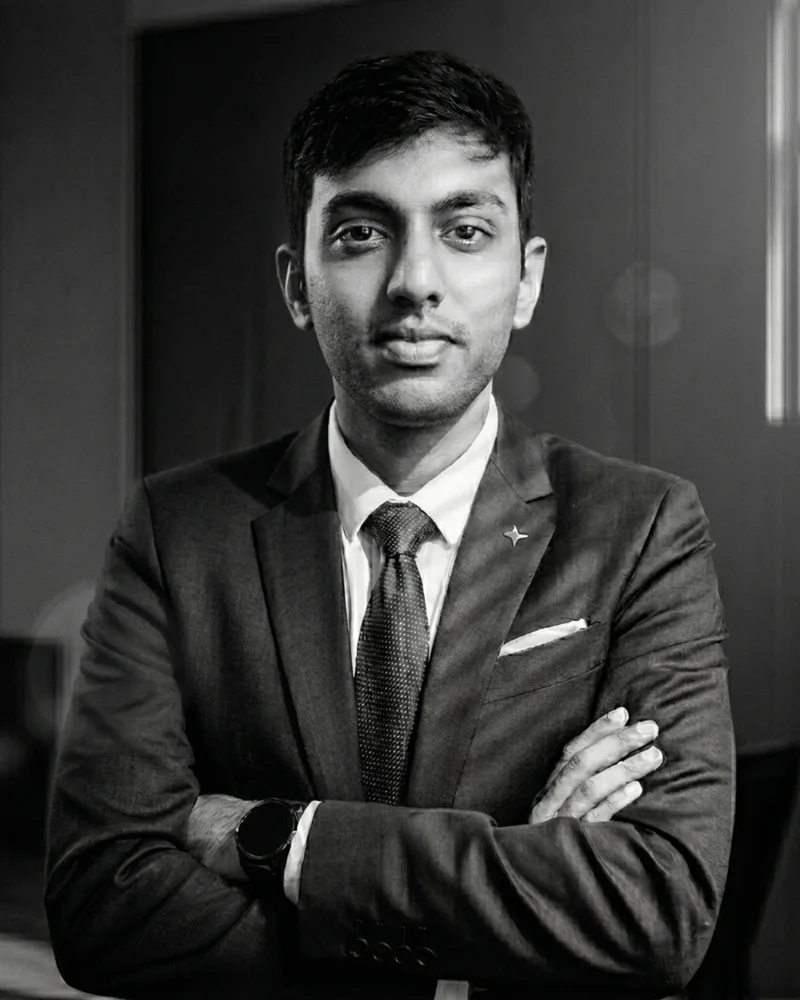
Arun AG
Founder, Brainvare
Arun AG is the founder of Brainvare, an AI-first creative studio based in Kochi, Kerala.
Ready to Transform Your Marketing with AI?
Let Brainvare's AI-first team build marketing systems that deliver measurable results. Book a free strategy call today.
Get Started